Hi tiny little ones,
It’s (again) been some time since I last wrote. There were so many things happened that I want to share in this blog. I spent December last year in ministry, wrote a sacred solo as an altar call for my Mum’s sermon (which inspired me to create more!), prepared personalized digital newsletter to every person registered for our yearly fellowship event–complete with a video message for our New Year fellowship (all with my limited tech skills but an ambitious dream to make it look as professional and personal as possible, ha!), and (finally) got to spend the end of the year in the Holy Land until the early January. I returned with weekly ministries, leading a new group of Bible Study, “accidentally” started a new one for children, explored children pedagogy method to adapt Bible study materials for them, led a funeral service, and all the while juggled daily chores and tried to keep my sanity (haha!). So many interesting things have been happening, and the Lord has strengthened me with His promise in Philippians 4:13 earlier this year. So, I hope to share the blessings I’ve got through those experiences, hopefully in the next posts.
Through all these tasks, I still carried a question that’s been in my head for the past 9 years after my voice recital in 2017: what are all these for?
I struggled so much during my second year of study preparing my senior ministry recital. The vocal pieces I had had so many note paintings that hurt my head and heart. Not only because of the musical difficulties, well that was too, but because I didn’t know what all of it was for. None in my ministry back home would understand the Latin words of the Mass, none could appreciate deeply the beauty of classical music I was doing, let alone the interpretations of it. I crumbled at the thought of “Why am I doing what I am doing?”
I didn’t enjoy singing, and practically hated everything at that point. I regretted taking a voice major, even questioned my calling to continue my Church Music studies. I basically lost my purpose and all I was doing felt meaningless. I didn’t think that this “language” was what my people spoke. Even at the interview exam before my graduation in 2019, when one professor asked how will I apply the Mozart’s Alleluia–which I sang during a performance lab–to my ministry, I bluntly answered that it’d also been my question for the past two years.
I still remember the morning I stepped into T3 at Changi’s airport, heading home two weeks after graduation. As I saw many Indonesians sitting there in the waiting corridor, a question crossed my mind, “How can I understand their language so that I may use what I’ve learned to minister to them?” But that was not about our spoken “language.” That same question continues even until the 7th year after my graduation.
Earlier this month, as I was warming up my voice for our online weekly service, I felt like I’ve failed to learn and understand my people’s “language.” The Bible study groups I lead and other ministry routines I do are all going well, but in ministry class, no one in it seems to have enough initiative to do something more. I felt like a failure. All those liturgy and ministry topics I taught result in nothing. I opened my recital files to see if I was still able to sing my piece well, or if I could do it better than before. I sang each piece, from Gloria in excelsis Deo to Quoniam tu solus sanctus. Then something hit me. What if all these liturgical and musical stuff were not for them (yet)? What if this language I’ve been learning (not talking about Latin tho) was not for me to minister the people, but to bring my worship to God? Just like what Paul said about speaking in tongue to God and not during communal worship unless someone has the gift to interpret it (1Cor. 14).
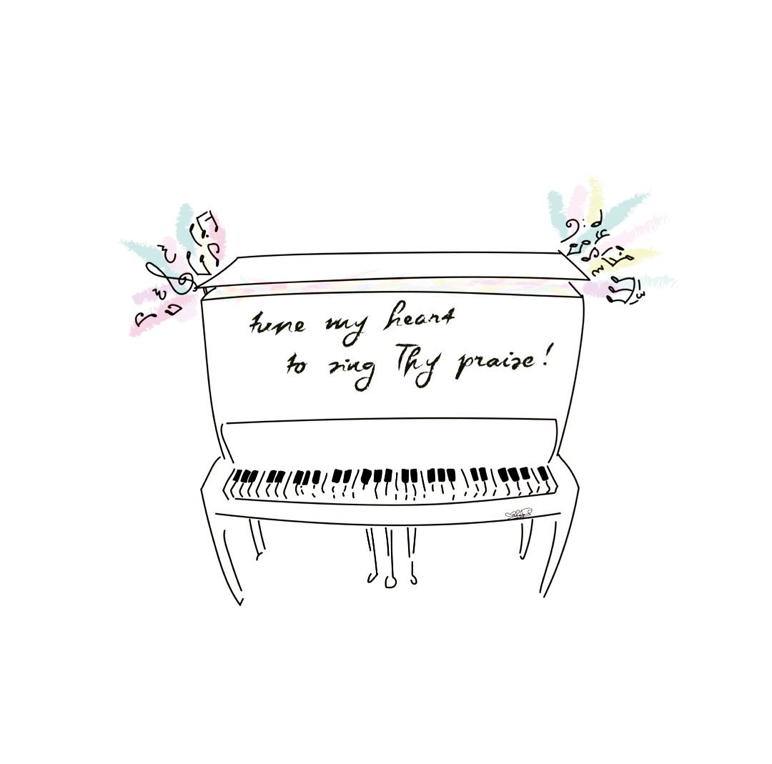
Sure there are so many things I could apply from my studies to my ministries. But what most important is not what I could give to the people, but what do I give to God as my worship to Him. It should be between me and God first, and then me to the people God gives me to minister to them. So here I am closing my long awaited answer. All those traditional mass and classical voice pieces are from God and to God for His glory. And with a renewed heart and head I now can say: Gloria in excelsis Deo, quoniam Tu solus sanctus, Tu solus altissimus, Jesus Christe!
Thank you for reading this article, I hope you feel blessed as I do! I would be glad to hear your story about God and all His goodness. I am currently getting back on my track to write weekly post (hopefully more in the future). Let’s connect and so I could hear your story too about the goodness of God!

 Tiny Little Things
Leave a comment